

Welcome Message
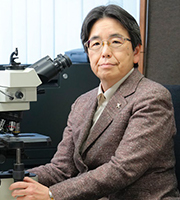
- The 116th Annual Meeting of the Japanese Society of Pathology
- President Yae Kanai, M.D., Ph.D.
Professor, Department of Pathology,
Keio University School of Medicine
The 116th Annual Meeting of the Japanese Society of Pathology will be held from April 15th (Thu) to 17th (Sat), 2027, at Pacifico Yokohama North. The theme of this meeting will be "Back to basics: A view of pathology as a multidisciplinary hub".
Pathological diagnosis is responsible for providing final diagnosis and treatment guidelines for patients with cancer and other diseases. Currently, the process of pathological diagnosis is being transformed with the support of artificial intelligence and the incorporation of genomic information. In this era of change, I believe it is essential for pathologists participating in both basic research and diagnosis to further expand their fields of activity by reaffirming their commitment to the basics of pathology as a "multidisciplinary hub". As the concepts defined by human pathology represent a common platform for all life science researchers focusing on disease, pathologists can provide a valuable interdisciplinary hub that allows a wide range of basic research to be applied to the human body. On the basis of this broad scientific foundation, it is expected that pathological diagnosis will continue to be the most reliable guide to treatment.
Against this background, we have made every effort to create an interdisciplinary program for general meetings of the Japanese Society of Pathology, inviting outside researchers as guest speakers, and providing an opportunity for basic researchers and clinicians from a wide range of fields to participate in lively face-to-face discussions. At this year’s meeting, it is hoped that members will actively reexamine the depths and strengths of pathology, helping researchers from outside the Society to appreciate the value of collaboration with pathologists.
This year, the workshops and panel discussions have been designed to allow attendees to efficiently assimilate information useful for daily pathological diagnostics. In the light of the current demand for internationalization, even Japanese speakers now have the option to make presentations in English. Machine English translation for Japanese lectures will also be provided, and we hope to welcome many participants from Asia and elsewhere. In addition, there will be a session showcasing the results of research by undergraduate students, creating an environment that makes it easy for them to take on the challenge of presenting at an academic conference for the first time. It is anticipated that the open program will help promote the work of pathologists to high school students and other interested parties.
With these distinctive programs, I anticipate that this general meeting will prove fruitful, and I look forward to meeting many participants.