Welcome Message
Message to the 30th Annual Scientific Meeting of the Japanese Heart Failure Society
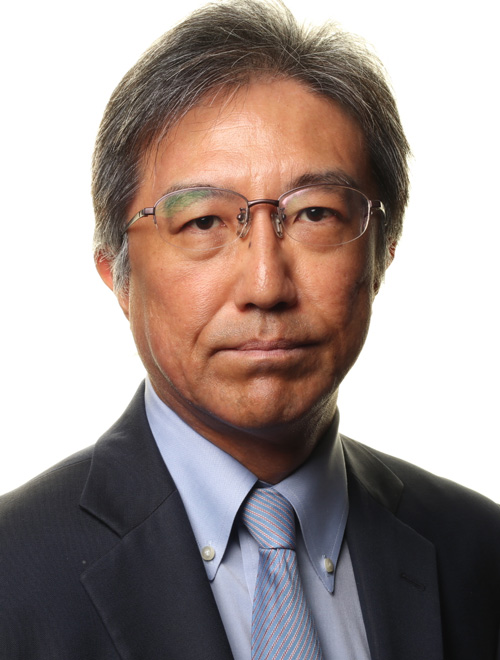
Koichiro Kinugawa, M.D., Ph.D.
Congress President of the 30th Annual Scientific Meeting of
the Japanese Heart Failure Society
Professor and Chief,
Second Department of Internal Medicine Faculty of
Medicine (Cardiology and Nephrology) University of Toyama
It is my pleasure to greet you as President of the 30th Annual Scientific Meeting of the Japanese Heart Failure Society (JHFS). I feel both honored and humbled to host this milestone 30th Meeting. I was elected as President of the JHFS at the board meeting during the 26th Meeting in October 2022, and so will have served in this role for four years when the 30th Meeting is held. Recent years have seen many important advances in the study of heart failure, and we have been exploring ways to apply the insights gained from these advances and make them widely available. The 26th Annual Scientific Meeting in Nara, which was resumed as a face-to-face event after the Covid-19 restrictions were lifted, was attended by many JHFS members and others. The number of participants in subsequent Meetings has increased year by year, reflecting the high level of interest in the field of heart failure and the enthusiasm of medical professionals involved. The venues of the 29th, 30th and 31st JHFS Annual Scientific Meetings are Yonago, Toyama, and Niigata respectively, all of which are located along the Sea of Japan. With its pleasant climate, October is a good month to visit these places, with their impressive scenic beauty and excellent local food.
For the theme of the 30th JHFS Annual Scientific Meeting, we adopted the Latin phrase “Pauca sed Matura,” which is a motto of Carl Friedrich Gauss, a great mathematician at the time of the Holy Roman Empire (present-day Germany) from the 18th to 19th centuries. As many of you know, Gauss was the founder of modern mathematics, whose papers, including unpublished ones, laid the groundwork for almost all areas of modern mathematics, physics, and astronomy. The word “pauca” means “few” or “narrow,” “sed” means “but” and “matura” means “ripe” or “deep.” While this phrase is translated in various ways, “narrow but deep” feels most appropriate to me.
Of course, Gauss’s research interests were not “narrow” at all, yet he delved “deep” into each of them. On the other hand, I have been committed to digging deeply into narrowly focused topics in my 30-year career as a physician. To communicate the importance of having a narrow-but-deep focus to young doctors, I chose “Pauca sed Matura,” as the theme of this Meeting. While clinical practice and research in heart failure medicine encompass a very broad range of topics, each of which needs to be explored in depth, I would encourage young doctors to become an unparalleled expert on at least one thing. For this purpose, we plan to include sessions that will closely examine a single topic in the program of the forthcoming Meeting.
In this era of rapid change, I think the time has come for the JHFS to consider reorganizing itself, so we must actively discuss and explore how the JHFS should be in the future. There is still time before the 30th JHFS Annual Scientific Meeting, during which we will endeavor to develop a new vision for the JHFS to be presented at the Meeting.
We look forward to meeting many of you in Toyama in October 2026.