
Message from the President
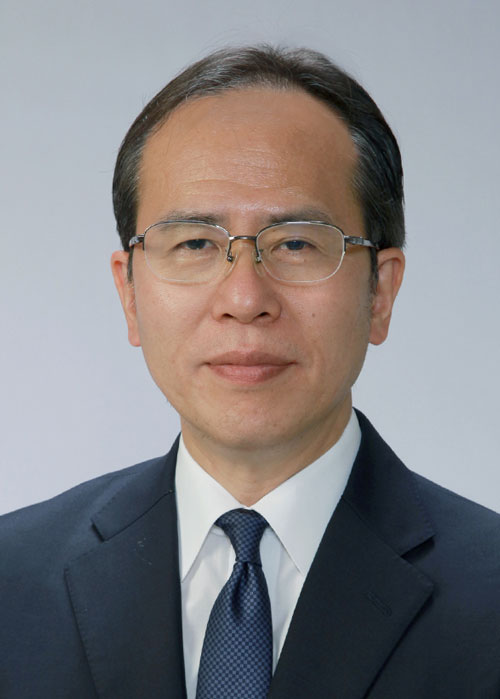
Shu WAKINO, M.D., Ph.D.
President, the 72nd Annual Meeting of the Japanese Society for Dialysis Therapy
Professor,
Department of Nephrology, Graduate School of Biomedical Sciences,
Tokushima University
It is my pleasure to greet you as the President of the 72nd Annual Meeting of the Japanese Society for Dialysis Therapy. I feel deeply honored to host this long-established, prestigious meeting.
The theme of this meeting is “The Power of Dialysis Therapy to Navigate Through the Times.” As you may notice, topics on dialysis medicine, on which our therapy is based, are often focused on its practical aspects. With a closer look, however, it is obvious that dialysis medicine is a highly interdisciplinary practice, involving a combination of many clinical specialties, such as cardiology, endocrinology, and metabolism, with nephrology at its core. Dialysis medicine is also closely related to basic medical sciences, such as biochemistry, physiology and immunology. Furthermore, it is supported by studies of fluid mechanics, condensed matter physics, and electronics, as dialysis systems and membranes are integral parts of the therapy. For this reason, medical-engineering collaboration has been in place in the field of dialysis medicine since its early days, unlike other clinical practices in which such collaboration cannot be easily realized. In addition, there are regional disparities in the ability to introduce dialysis systems and the availability of dialysis therapy, which are issues to be dealt with in the field of medical sociology. Needless to say, dialysis medicine, characteristically, is supported by professionals in various fields, such as nurses, dietitians, pharmacists, clinical engineers and caregivers, which makes it an interdisciplinary endeavor with exceptional breadth and depth. As members of JSDT, all of us should be aware and proud of being part of this endeavor.
On the other hand, the interdisciplinary nature of dialysis medicine has allowed us to flexibly adapt to advances in various scientific disciplines. To be specific, we have been using biostatistics since its emerging stage, while introducing ICT for medical services, such as remote medical care, without difficulties. These facts clearly indicate the resilience of dialysis medicine as a scientific discipline. In this sense, we may say that dialysis medicine is a discipline capable of cleverly and powerfully adapting to the changing times, and, for its coverage of a wide range of scientific fields, it has huge potential to guide us to a new path to move forward, regardless of whatever changes may occur in the medical and related fields. In this light, I am confident that the ongoing studies in this discipline will, surely, lead to the emergence of innovation in dialysis medicine.
I hope the forthcoming meeting will provide a guidepost for our future through opportunities to deepen our understanding of the breadth, depth and powerfulness of dialysis medicine, or “The Power of Dialysis Therapy to Navigate Through the Times.”
While the meeting will be held in Tokyo where I lived for many years, we are planning various events to present the attractions of Tokushima, a regional city where I am working today. We will continue our efforts to make the meeting a fruitful event where we can envision a bright future together. We very much look forward to your participation.