
Greeting
The 72nd Congress of the Japanese Society
of Oral and Maxillofacial Surgeons
Congress President,
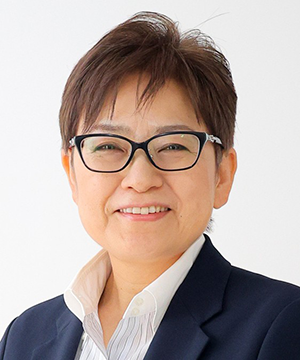
Michiko Yoshizawa, D.D.S., Ph.D.
(Department of Oral and Maxillofacial Surgery,
Matsumoto Dental University)
Shu-Ha-Ri — Tradition, Innovation, and Independence —
Shaping the Future of Oral and Maxillofacial Surgery from Diverse Perspectives
It is a great honor and privilege to serve as Congress Chair of the 72nd Annual Meeting of the Japanese Society of Oral and Maxillofacial Surgeons (JSOMS). I would like to express my sincere gratitude to all members of the Society for entrusting me with this important responsibility.
The 72nd Annual Meeting will be held from November 12 to 14, 2027, at the Nagoya Congress Center in Nagoya, Japan. The theme of the meeting is “Shu-Ha-Ri — Tradition, Innovation, and Independence,” with the subtitle “Shaping the Future of Oral and Maxillofacial Surgery from Diverse Perspectives.”
Oral and maxillofacial surgery is a discipline built upon the knowledge and skills developed and passed down by generations of our predecessors. We learn the fundamentals, refine our clinical expertise through experience, and contribute new knowledge through research. This continuous process of learning and advancement reflects the philosophy of Shu-Ha-Ri.
“Shu” represents Tradition: learning and preserving the fundamental principles and practices of our profession. Across generations, we have inherited not only clinical skills and sound judgment but also the values and attitudes essential to caring for our patients. “Ha” represents Innovation: challenging established approaches and exploring new possibilities. Advances in artificial intelligence, digital technologies, and regenerative medicine must be critically evaluated and thoughtfully integrated into clinical practice. Finally, “Ri” represents Independence: establishing our own professional expertise and creating new value from our respective perspectives. Through these individual contributions, we can collectively shape the future of oral and maxillofacial surgery.
The scientific program will feature an invited international lecture by Professor Harald Essig of the University of Zurich, who is engaged in advanced oral and maxillofacial surgical treatments incorporating digital technologies. We are also pleased to welcome Professor Fumiyo Ikeda of the Graduate School of Frontier Biosciences, Osaka University, as a special lecturer. Professor Ikeda is internationally recognized for her research in ubiquitin biology. In addition, educational lectures are planned by Professor Atsushi Otsuka of Kindai University Faculty of Medicine, who will discuss the application of artificial intelligence in medicine, and Dr. Kazuhisa Yamazaki of RIKEN, who will address the relationship between the oral and gut microbiota and systemic diseases.
The meeting will also cover a broad range of topics, including recent advances in major clinical areas of oral and maxillofacial surgery, technological innovations encompassing regenerative medicine, the endeavors of young researchers, and interprofessional collaboration. Through international exchange programs and other scientific activities, we aim to provide opportunities for participants from diverse specialties and backgrounds to share knowledge and engage in meaningful discussions.
I understand that I will be the first woman to serve as Congress Chair in the history of JSOMS. I regard this as a significant milestone in the Society’s continuing development. With deep respect for the many distinguished colleagues who have contributed to the Society over the years, I am committed to fulfilling this responsibility to the best of my ability.
I hope this meeting will provide an opportunity for young oral and maxillofacial surgeons to envision their future careers, while experienced colleagues share the knowledge and skills they have acquired over the years. I also hope to create an environment where surgeons working in different circumstances and roles—whether balancing professional responsibilities with childcare or caregiving, contributing to community healthcare, or pursuing education and research—can exchange their experiences and perspectives.
By preserving our traditions, embracing innovation, and developing our independence as professionals, we can open new paths toward the future. I sincerely hope that the discussions and interactions in Nagoya will contribute to the continued advancement of oral and maxillofacial surgery in Japan and beyond.
I look forward to welcoming you all to Nagoya in November 2027.
